
Electrical safety at home
Electricity powers nearly everything in our homes. It can also pose serious risks if not handled properly. Learn how to protect your household with tips on identifying hazards, using equipment safely, and knowing what to do during a flood or emergency.


Common electrical hazards at home
Spot and fix these issues before they become serious problems:
- Damaged wires - Frayed or torn cords can cause fires or electric shocks. Replace them immediately.
- Overloaded circuits - Breakers that trip often may signal too many devices on one circuit. Avoid plugging one power bar into another (known as “daisy-chaining”), which can overload outlets and increase fire risk.
- Extension cords - Never use extension cords as permanent wiring or link them together. Keep them clear of walkways to avoid damage.
- Light switch issues - If a switch is hot, loose or making noise, turn off the breaker and call an electrician.
- Dirty refrigerator coils - Dust buildup can cause overheating. Vacuum the coils every three months — and more often if you have pets.
- Shaking or vibrating laundry machines - Excess movement can loosen wiring. Make sure machines are level and cords are undamaged.
- Flickering or dimming lights - This could signal loose connections or overloaded circuits. Contact a licensed electrician if it happens regularly.
- Burning smells or buzzing sounds - This could be a sign of overheating or faulty wiring. Unplug the appliance immediately and have it checked by a professional.
Electrical safety devices
To prevent electrical hazards, consider putting these safety devices in your home. Some of them will require professional installation or inspection by a licensed electrician to ensure they are up to code and functioning properly.


Surge protector power bars
These help prevent voltage spikes from damaging your electronics. Not all power bars offer surge protection, so check the label before buying.

Whole-home surge arresters
Installed directly in your electrical panel, these devices protect your entire home from power surges.


Tamper-resistant outlets
These have built-in shutters that block foreign objects unless equal pressure is applied. They’re ideal for child-proofing your home.


Arc fault circuit interrupters (AFCIs)
These detect and prevent electrical arcs — one of the leading causes of electrical fires. They’re typically installed in your panel to protect entire circuits.
Ground fault circuit interrupters (GFCIs)
These outlets are designed to shut off power immediately if they detect a ground fault. This protects you from electrical shock in areas where water and electricity may meet (like kitchens, bathrooms, laundry rooms, garages or outdoors).
To test your GFCI, each month you should:
- Plug in a small device like a nightlight.
- Press the Test button. The light should turn off.
- Press the Reset button. The light should turn back on.
If the light doesn’t turn off, the GFCI may be faulty. Contact a licensed electrician for replacement.


Understanding your home’s electrical system
Your home’s power may come from:
- Overhead service lines: Hydro Ottawa owns the line up to the first pole on your property. Beyond that, maintenance is your responsibility.
- Underground wiring: Power is delivered through buried cables. Be sure to maintain a clear path to access points for safety and service.
Use our interactive diagram to see which equipment is ours and which is yours. Moving the slider to the left will highlight all Hydro Ottawa-owned equipment in yellow. These illustrations are for informational purposes only, and do not replace or override the official standards of the Electrical Safety Authority.
Overhead service lines
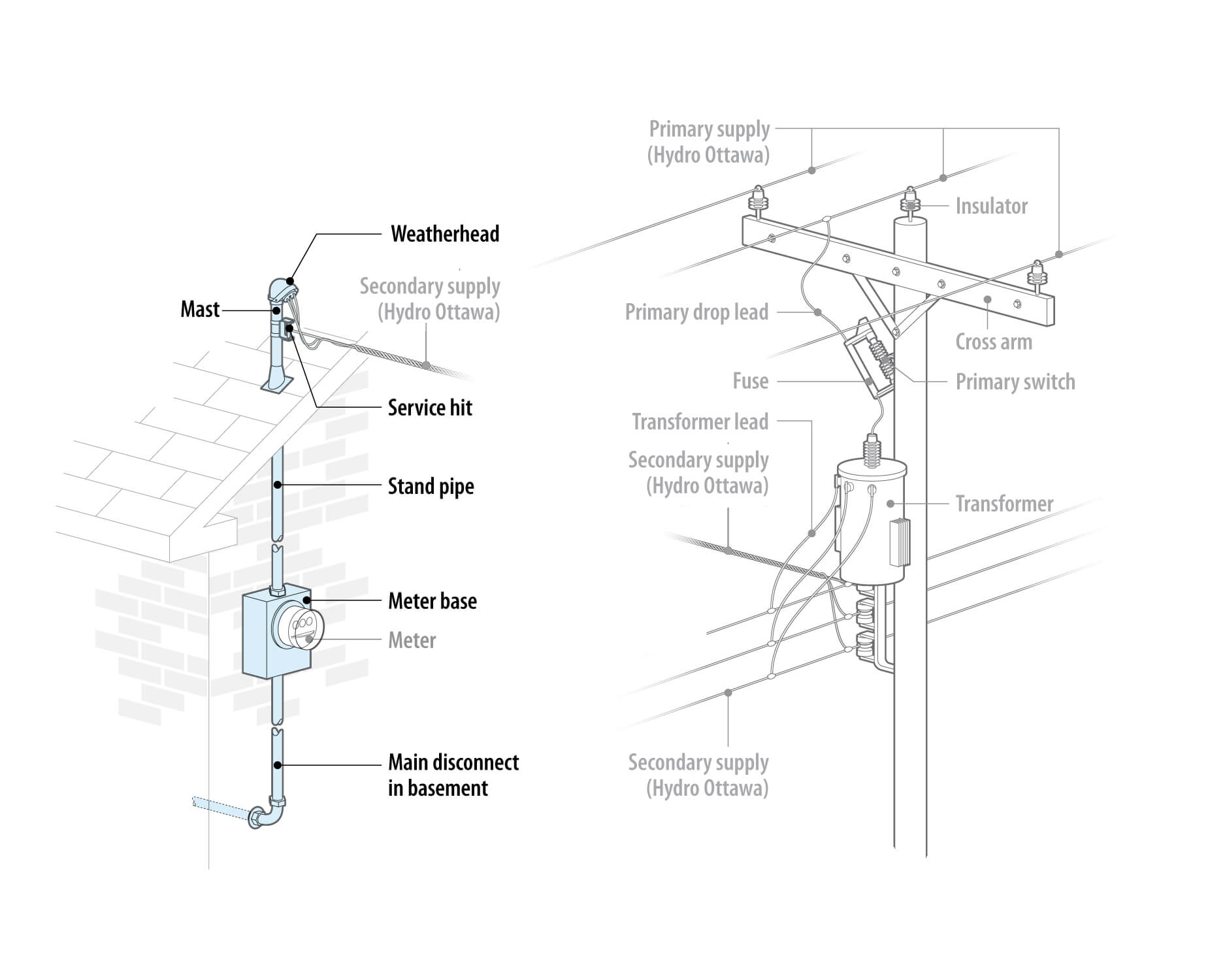
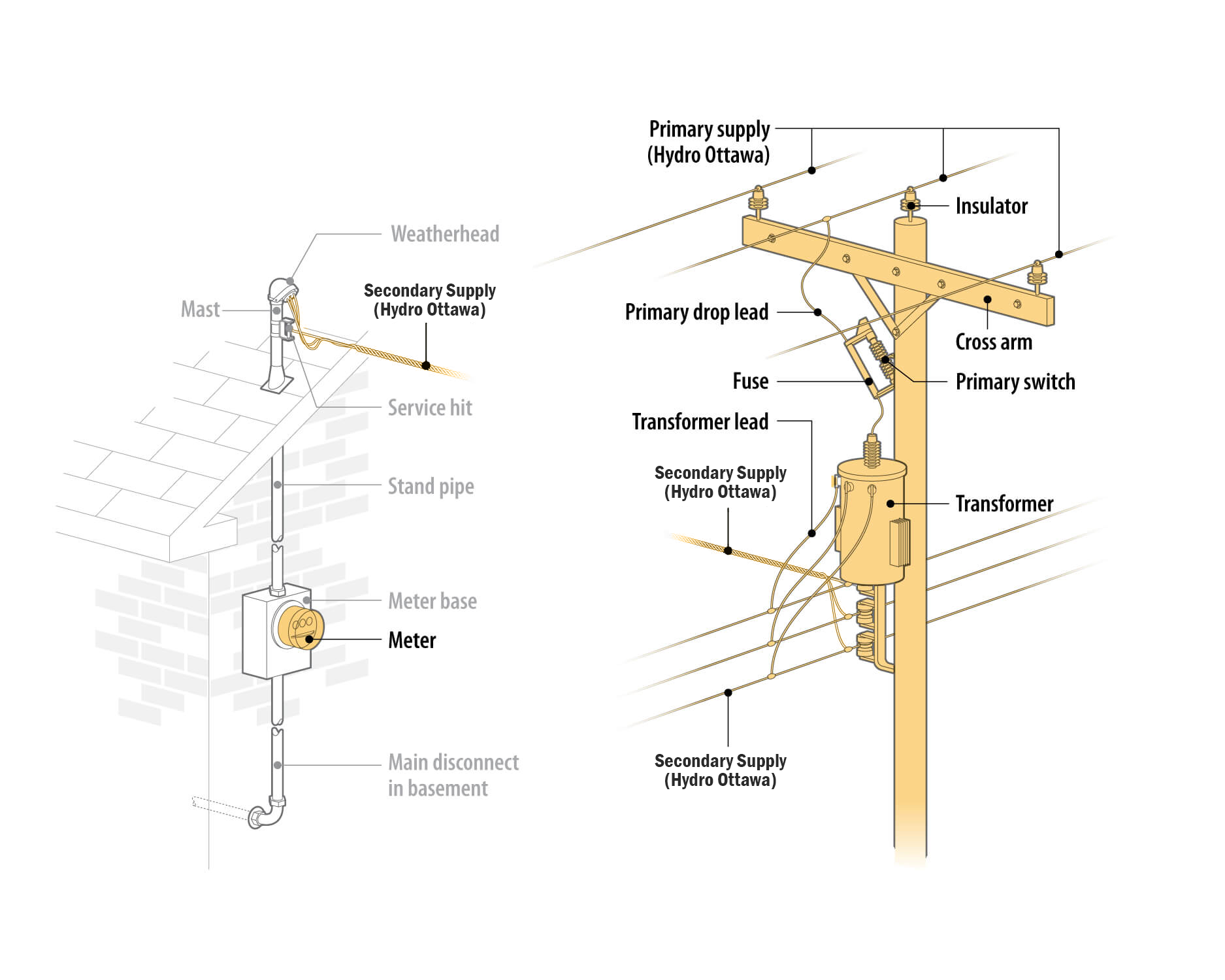
Underground wiring
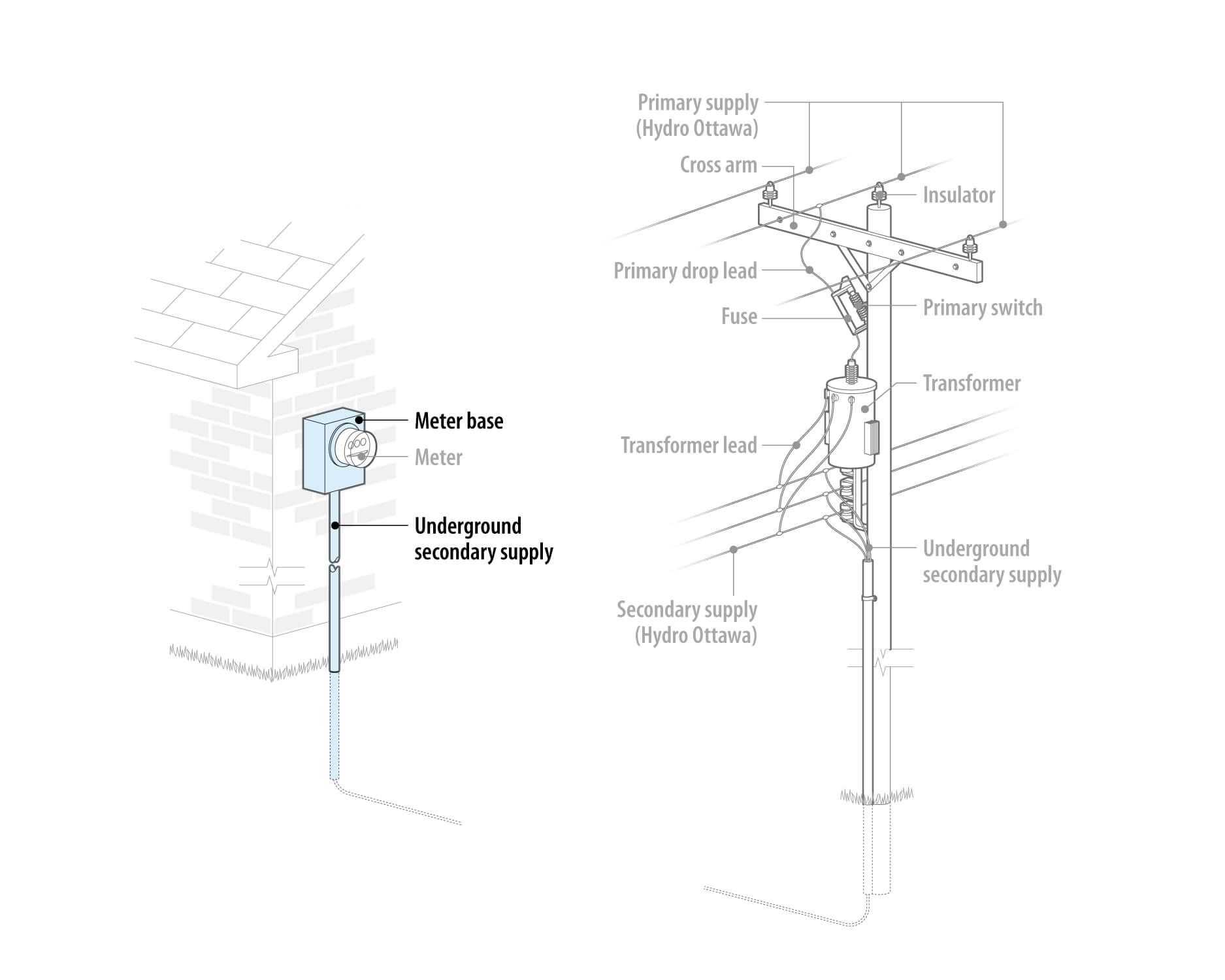
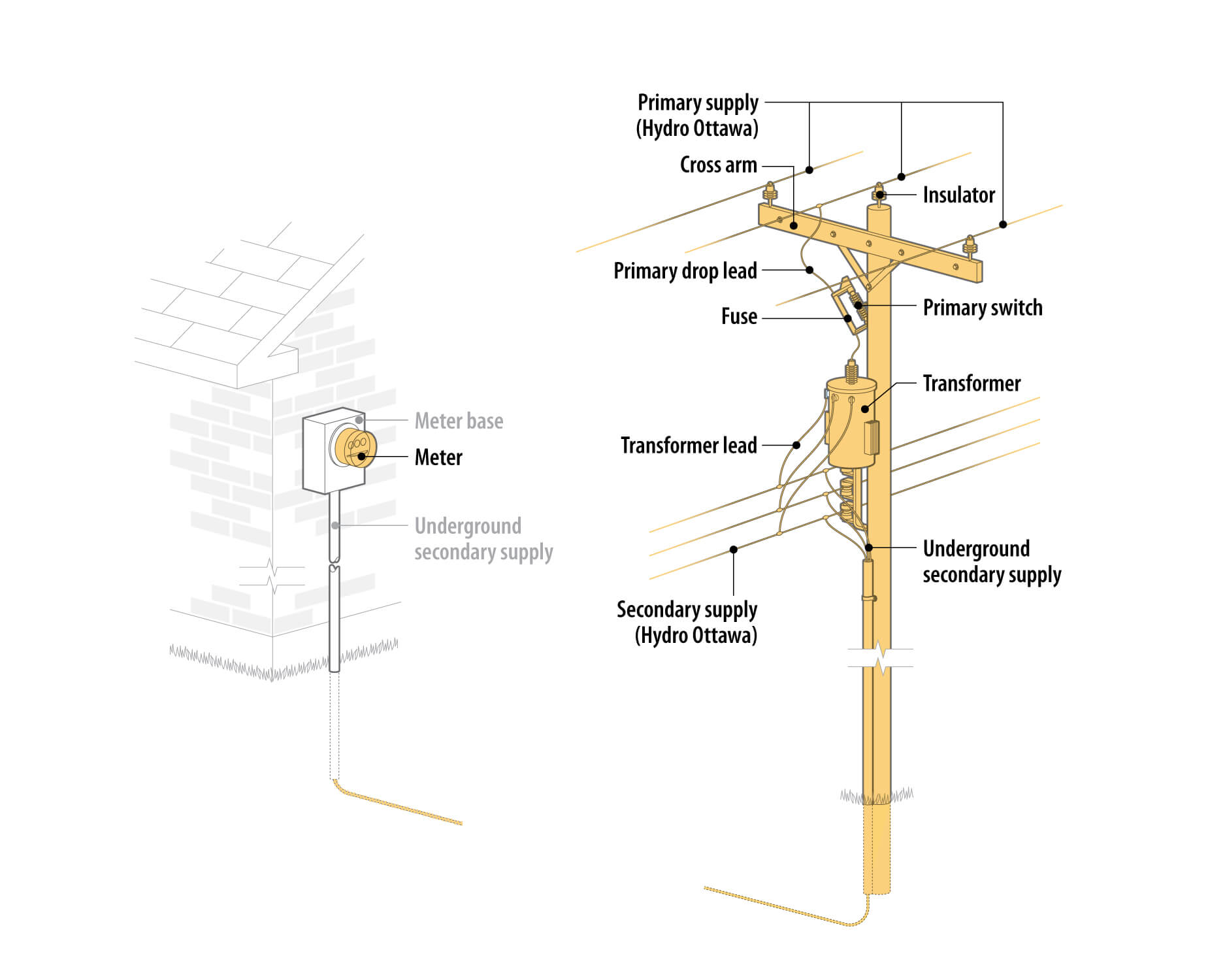
If your home is set back from the road:
Hydro Ottawa-owned overhead lines typically run along public roads to supply multiple properties. In most cases, these lines don’t extend into private property.
However, if your home is located farther from the road and is serviced by an overhead connection, you may be required to install poles and wires on your land to carry electricity from the street to your home. In these cases:
- Hydro Ottawa owns the line up to the first pole on your property.
- You are responsible for all poles and wires beyond that point.
- These customer-owned lines serve only your property and not any other homes.
If trees or vegetation surround your poles or power lines (outside the road allowance), it is your responsibility to maintain clearances and ensure safe access. We manage tree trimming only within the public right-of-way.
Flooding and electrical safety
Floodwater and electricity are a dangerous mix. If your home is at risk of flooding, take these precautions to protect your family and your electrical system.
- Stay out of flooded basements or outbuildings. Water may reach outlets, baseboard heaters or your electrical panel, creating a risk of serious shock or electrocution.
- Call us at (613) 738-6400 to request a disconnection if water has come into contact with any electrical components.
- We will waive disconnect/reconnect fees if you’ve been affected by flooding.
- Avoid using any water-damaged appliances or outlets. They could pose shock or fire hazards, even after they appear dry.
- If you see a downed power line, stay 10 metres away from it and call 9-1-1 immediately.
- Plug pumps only into outlets protected by a ground fault circuit interrupter (GFCI).
- Keep all plugs and extension cords away from water-prone areas.
- Never enter a flooded space until power is disconnected and we have confirmed it's safe.
- If water hasn’t yet entered your home, unplug and move your electrical devices away from flood-prone areas.
- Watch out for damaged power lines. If you see a downed line, keep a distance of 10 metres (or the length of a school bus), call 9-1-1 and report the damage to Hydro Ottawa.
- Do not enter a wet basement until we have disconnected power.
- Only a licensed electrical contractor can evaluate and repair flood-damaged systems.
- The contractor must apply for an electrical permit and arrange an inspection by the Electrical Safety Authority (ESA).
- Once the ESA approves the completed work, we will reconnect your service.
- Keep the ESA Certificate of Inspection for your records and insurance claims.
- Never reuse any appliances or cords that have come into contact with floodwater.
Questions about electrical safety?
Contact the Electrical Safety Authority (ESA):
| Contact our Customer Service team:
|